THE CENTRAL KITCHEN
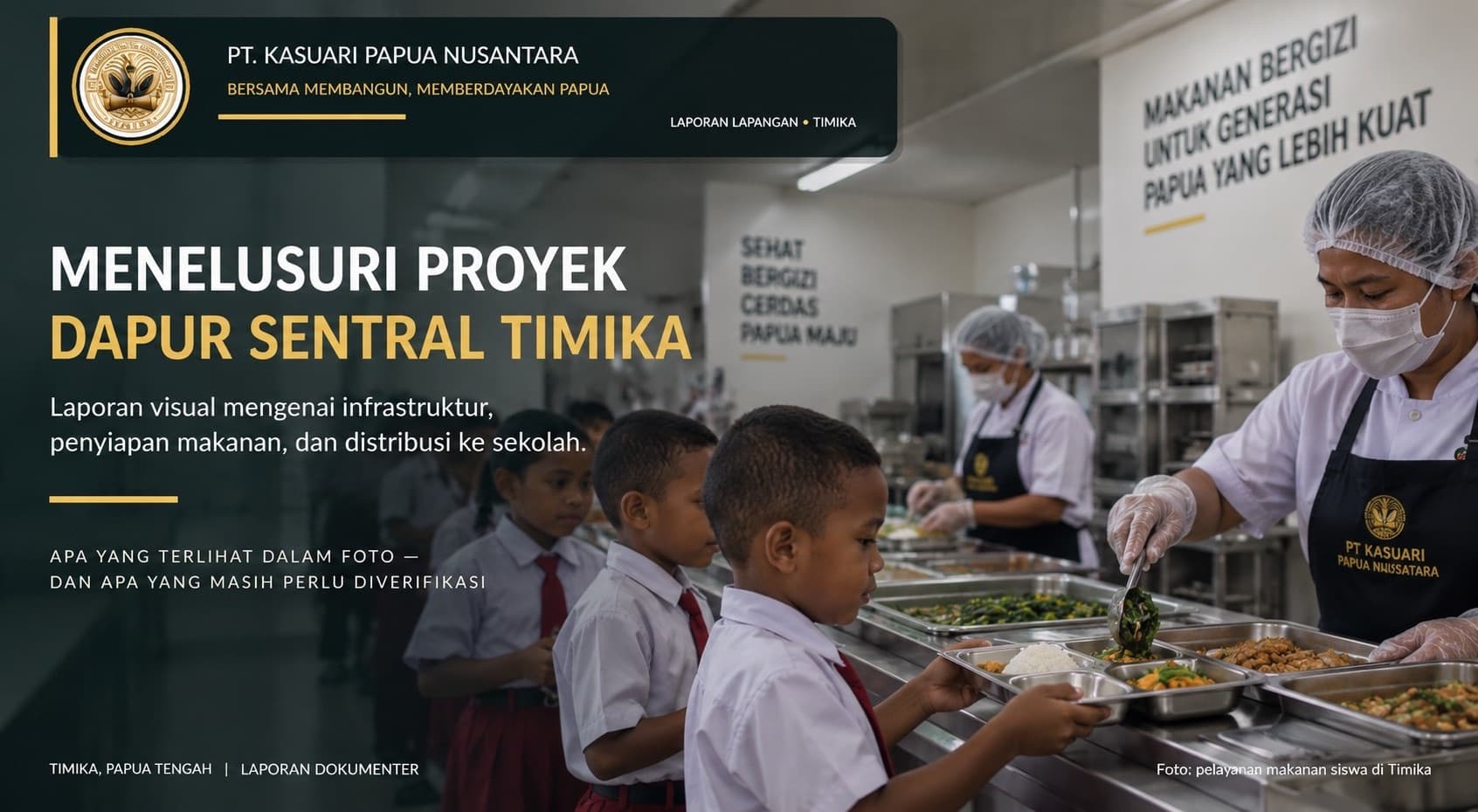
Students receive meals at the Timika central kitchen. Stainless stations, hygiene practice, and a serving line built to support daily school delivery.
Community Nutrition & Livelihoods
Timika, Papua Tengah · 2025
A visual field report on infrastructure, meal preparation, and school delivery. PT. KPN developed the Timika central kitchen with local business partners to support nutritious meals for Papuan students — and to keep work, training, and food demand in Timika.
The national Makan Bergizi Gratis (MBG) program frames school meals as an investment in healthier, better-prepared generations. Against that backdrop, the Timika kitchen was built to invest in and operate central-kitchen capacity with local relationships, capital, operating experience, and community participation. The stated purpose is community service and humanitarian support. A school meal here is meant to carry four kinds of public value: access to safe, nutritious food; attendance and learning readiness; demand for local food, MSMEs, and employment; and reduced food pressure on vulnerable households. Facilities are in place. The preparation line is active. Packed meals arrive at school. Students eat in class. PT. KPN supports this work with local partners; it does not claim sole ownership of the national program.
Students receive meals at the Timika central kitchen. Stainless stations, hygiene practice, and a serving line built to support daily school delivery.
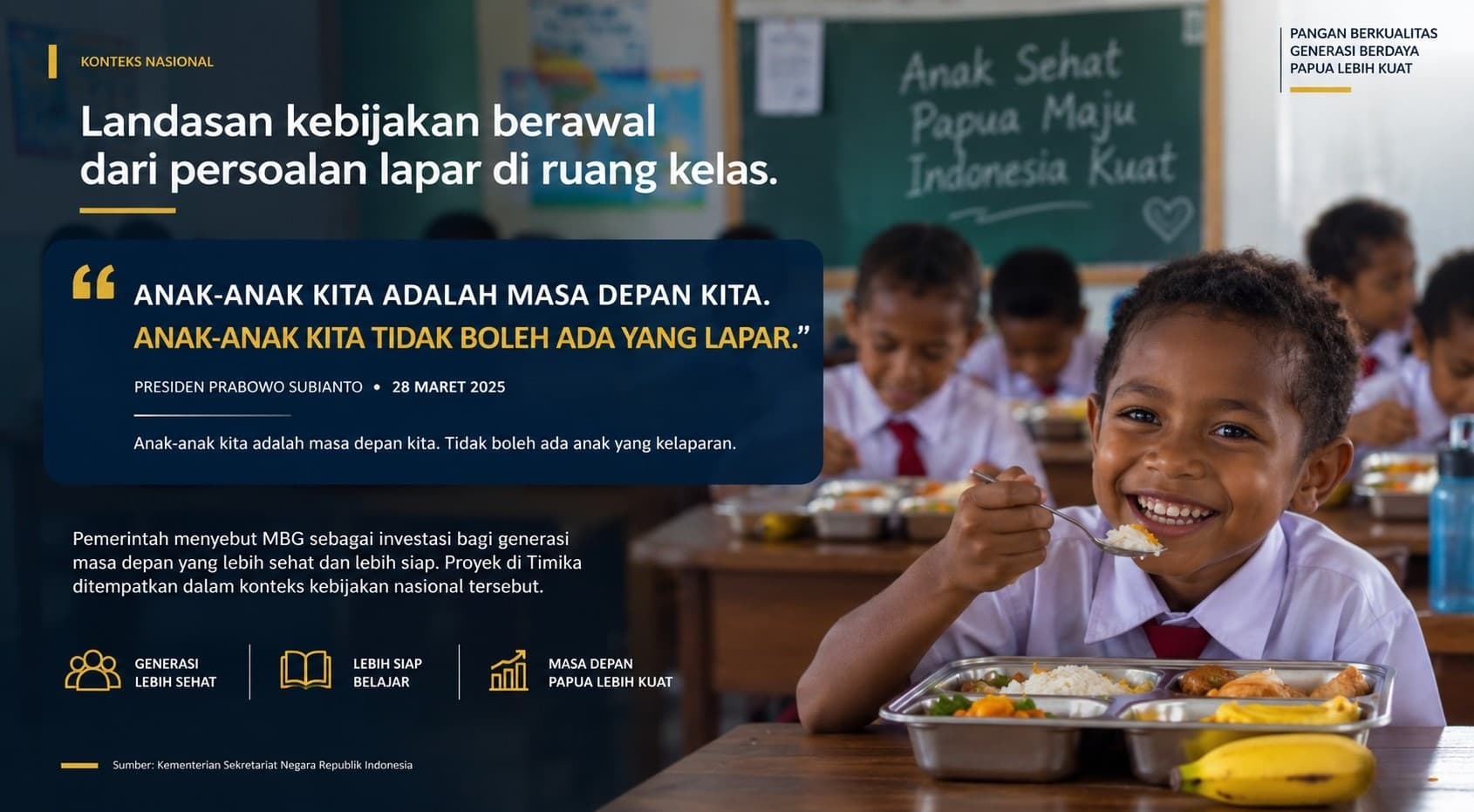
The policy case begins in class: none of our children should go hungry. MBG is described as an investment in a healthier generation, better prepared to learn, and a stronger future for Papua.
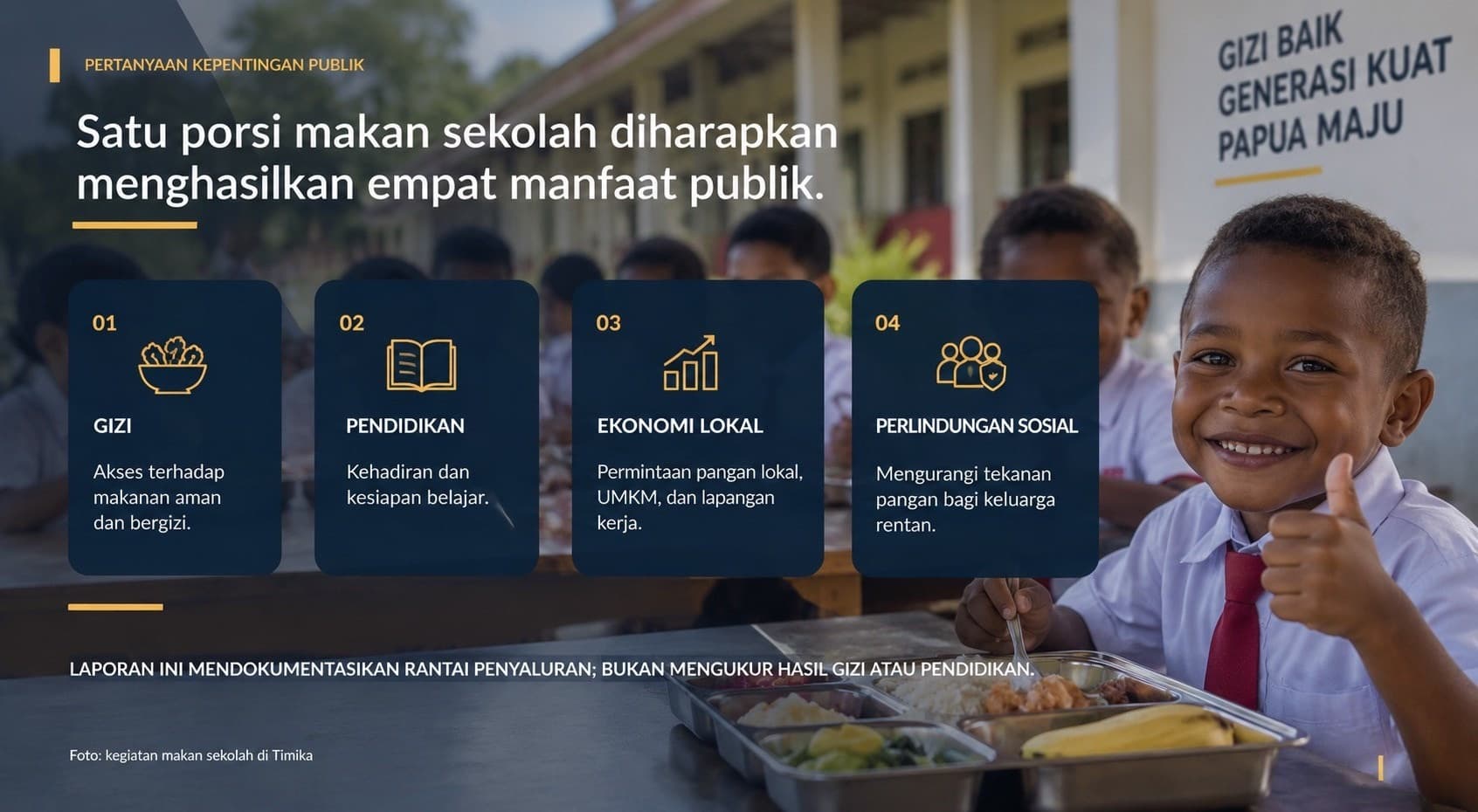
A school meal is expected to carry nutrition, education, local economy, and social protection — safe food, learning readiness, MSME demand, and less pressure on vulnerable households.
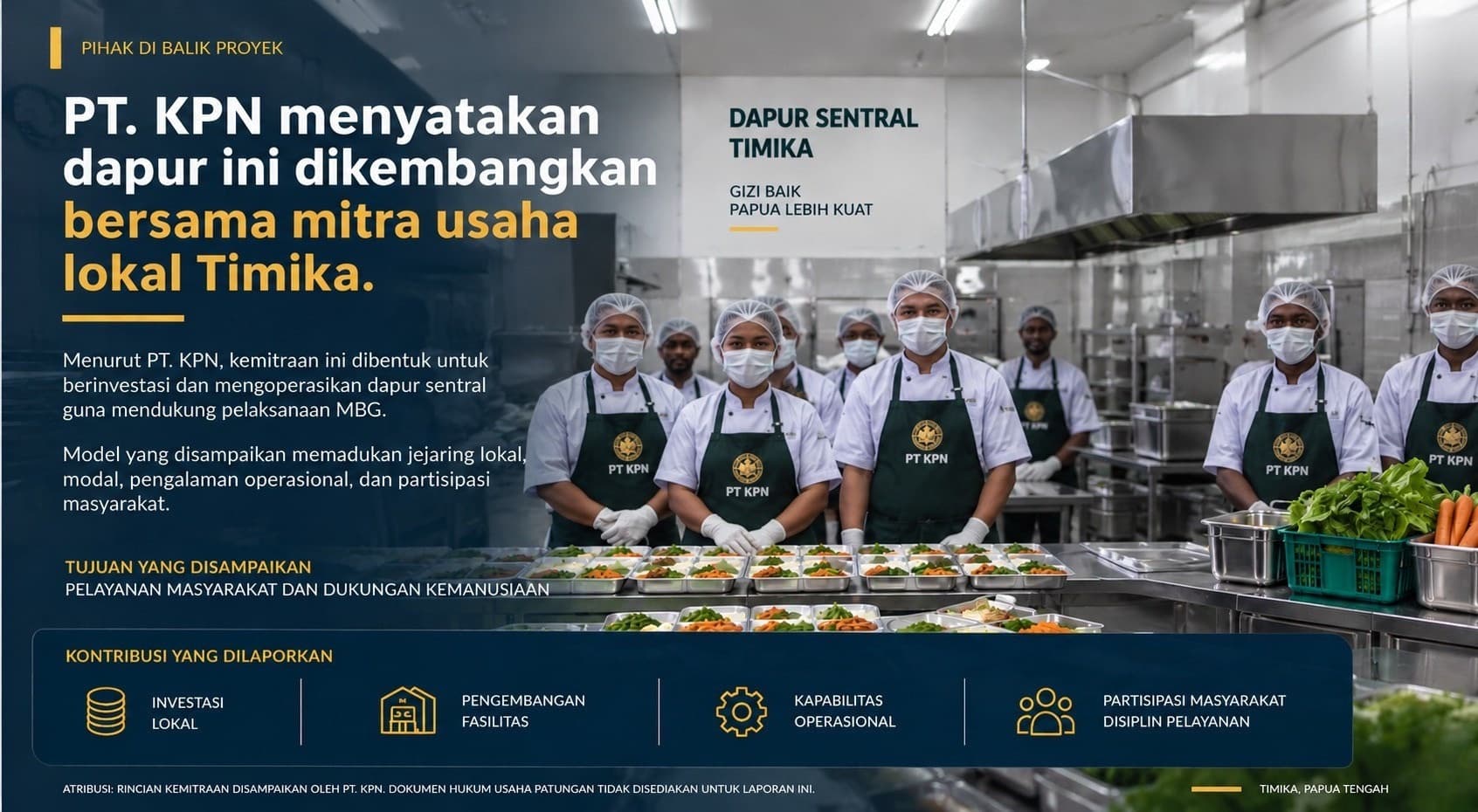
The kitchen was developed with local Timika business partners: local investment, facility development, operating capability, and community participation with service discipline.
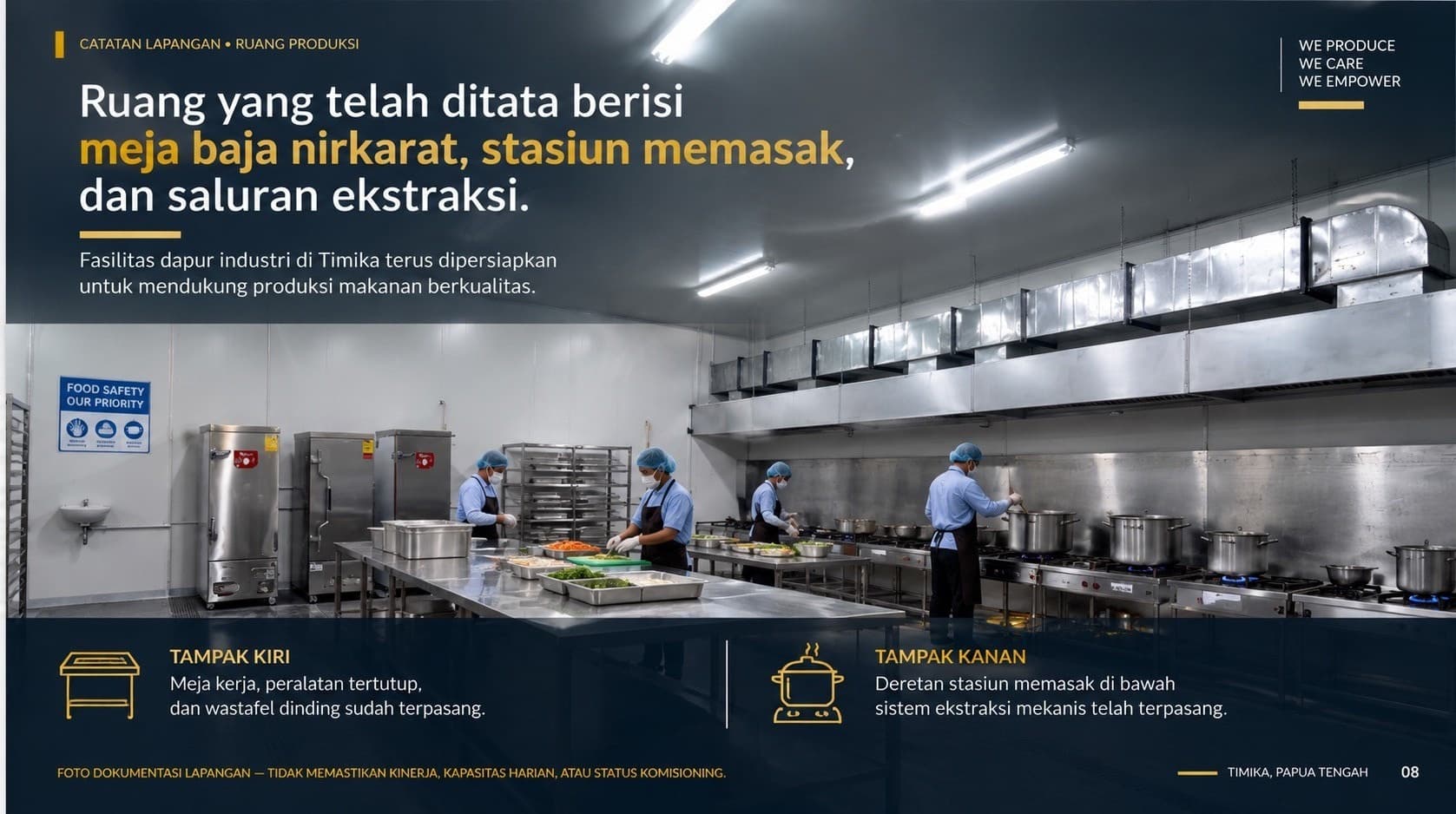
Stainless work tables, cooking stations, and extraction systems. The industrial kitchen continues to be prepared to support high-quality food production.
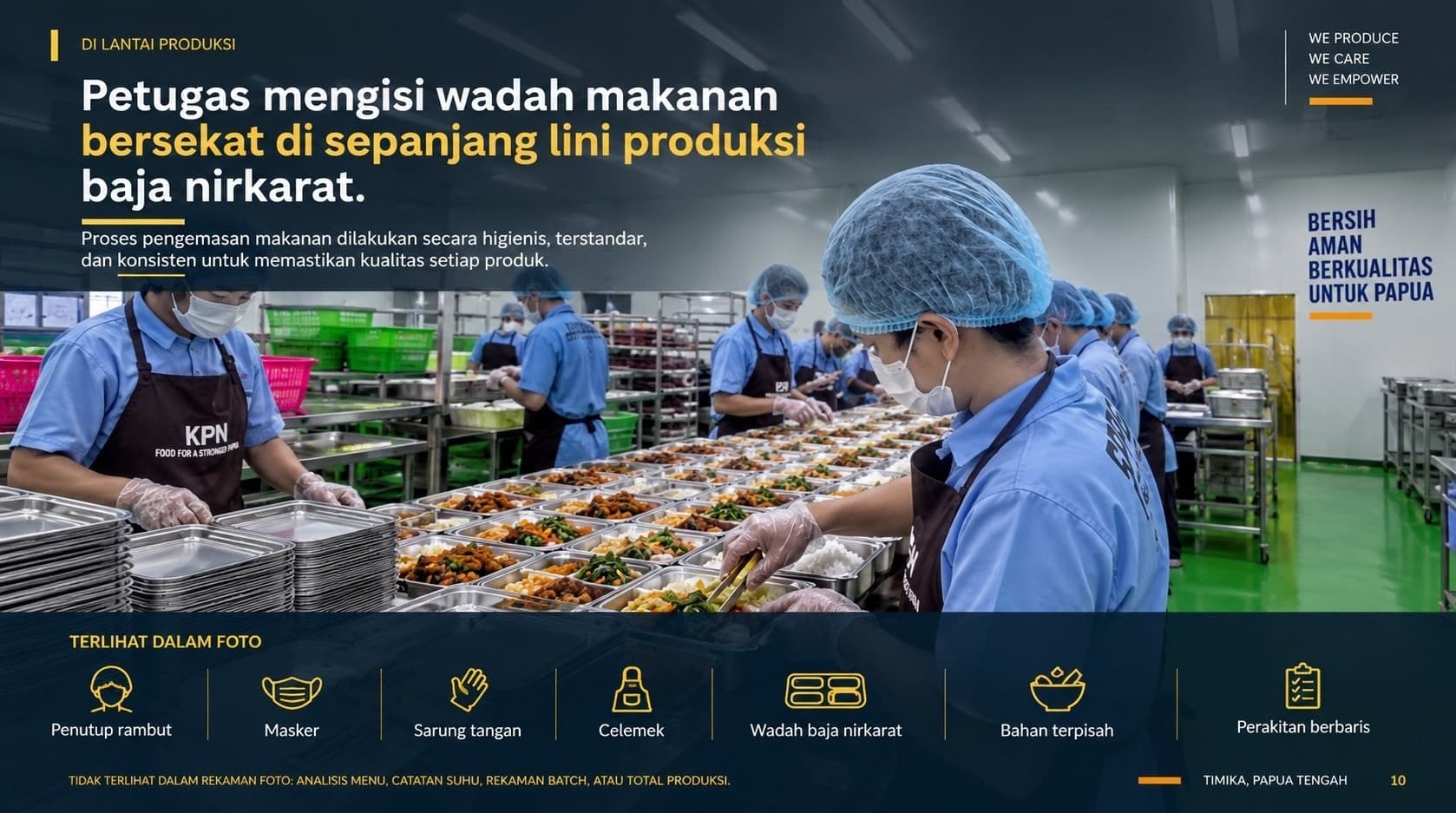
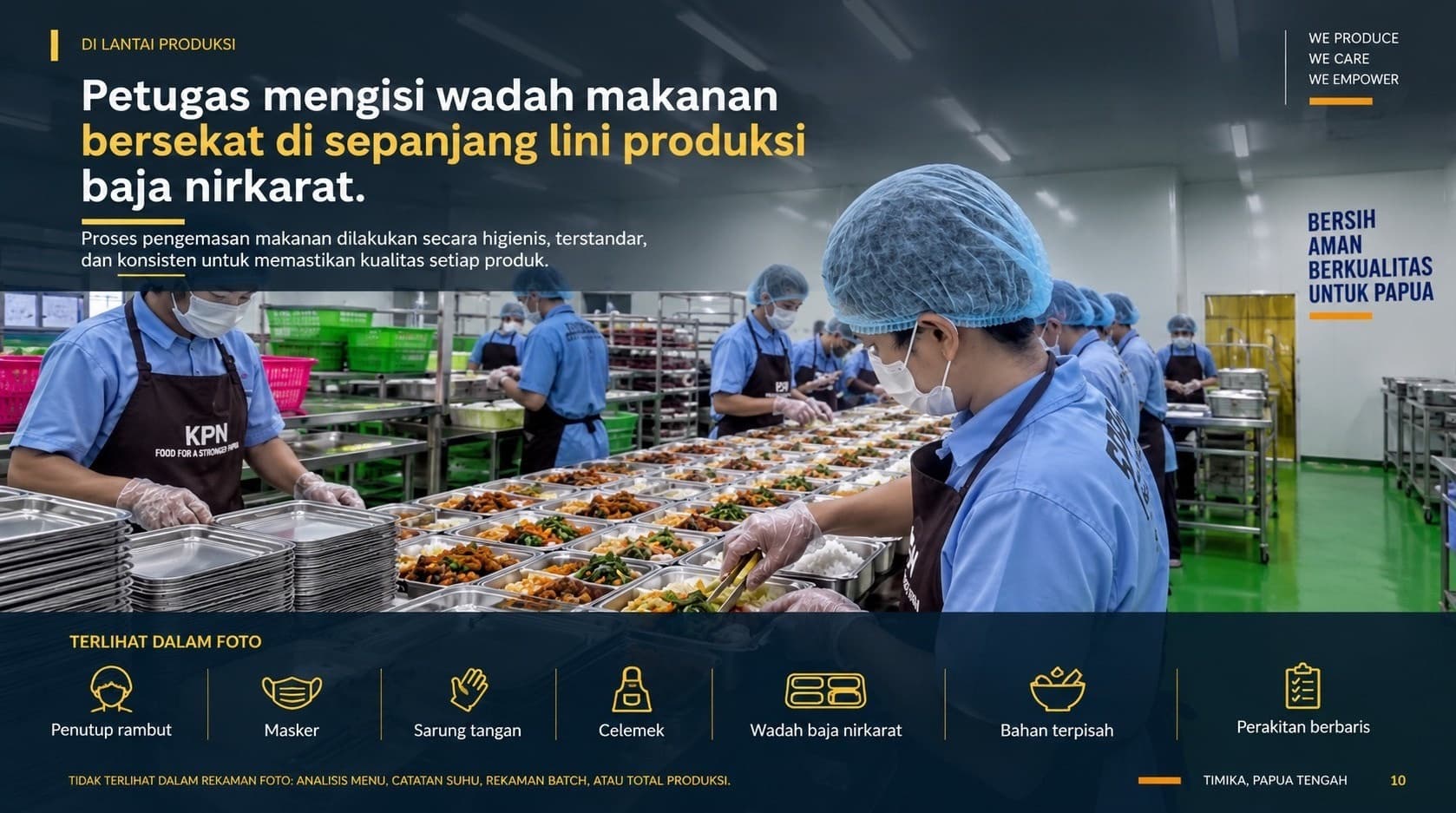
Workers assemble compartmented meal trays along a stainless line — hair covers, masks, gloves, aprons, separated ingredients, and line-based assembly.
A diverse team on duty beside prepared vegetables. The kitchen runs with local workers in food processing — including a path for meaningful Indigenous Papuan participation.
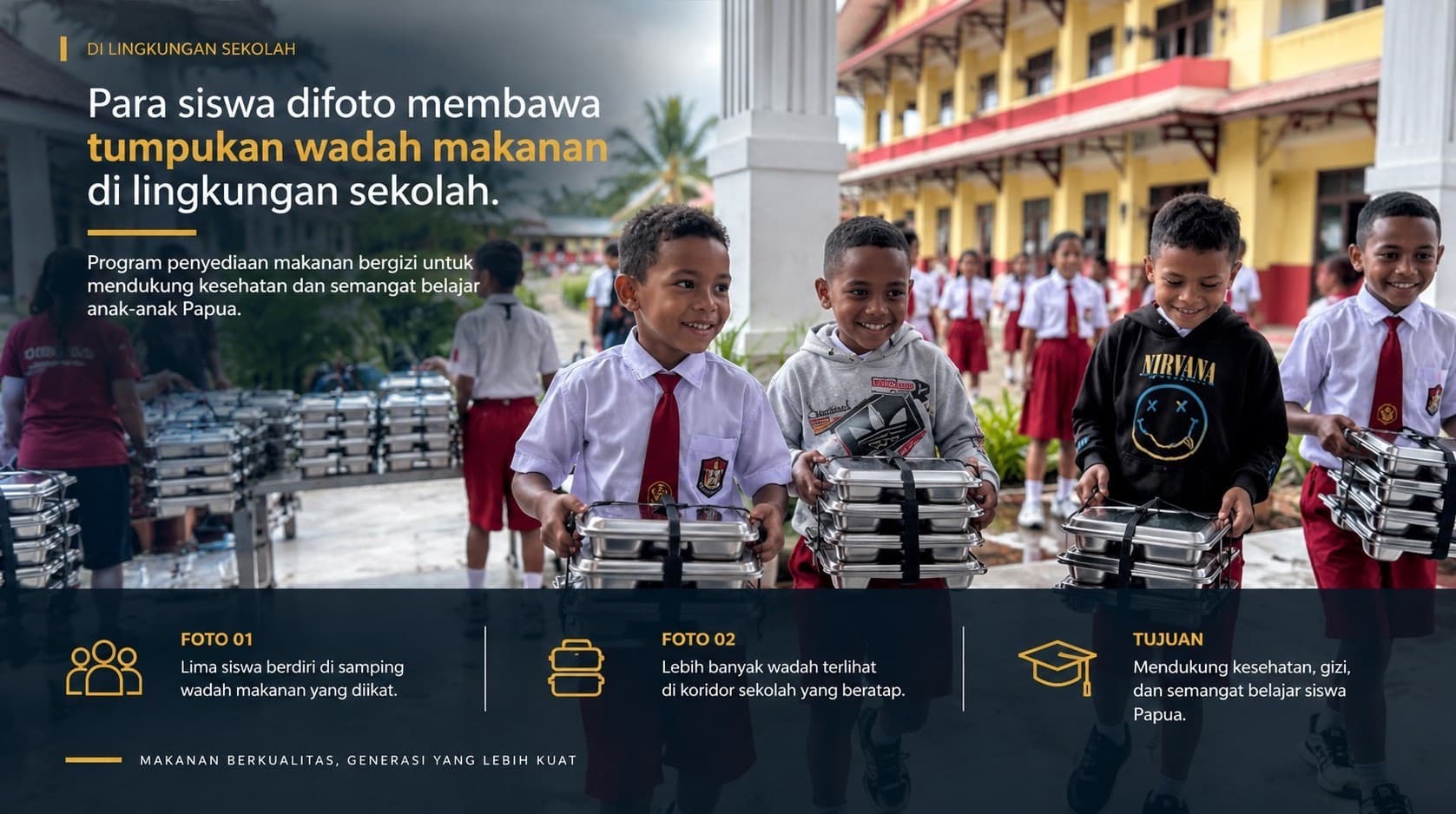
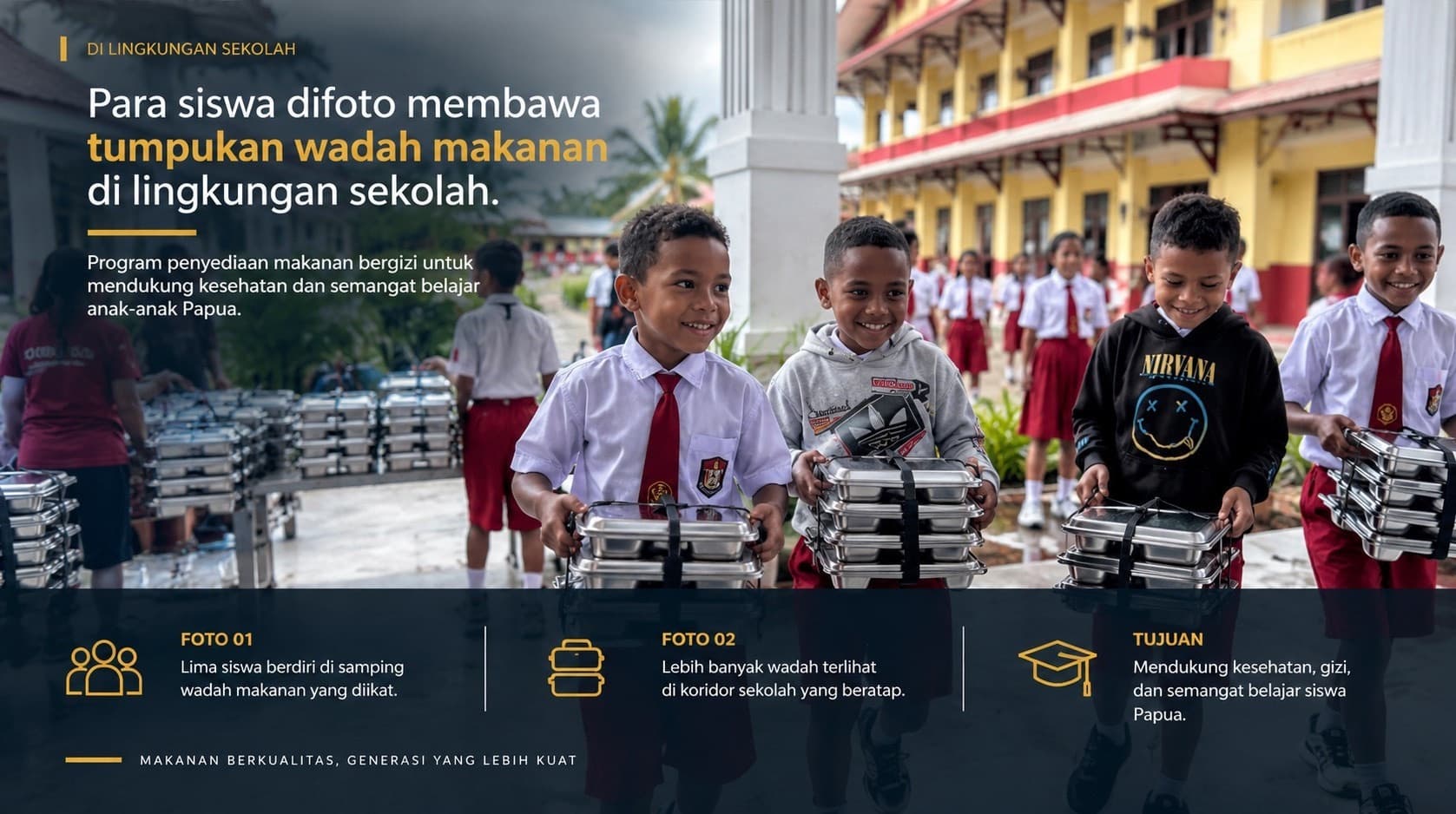
Students photographed carrying ready-to-eat packed meals in the school environment — a nutritious meal program to support the health and learning enthusiasm of Papuan children.
Students enjoy prepared meals at their desks. The aim is proper nutrition, better concentration, and healthier students — nourishing them for a brighter tomorrow.
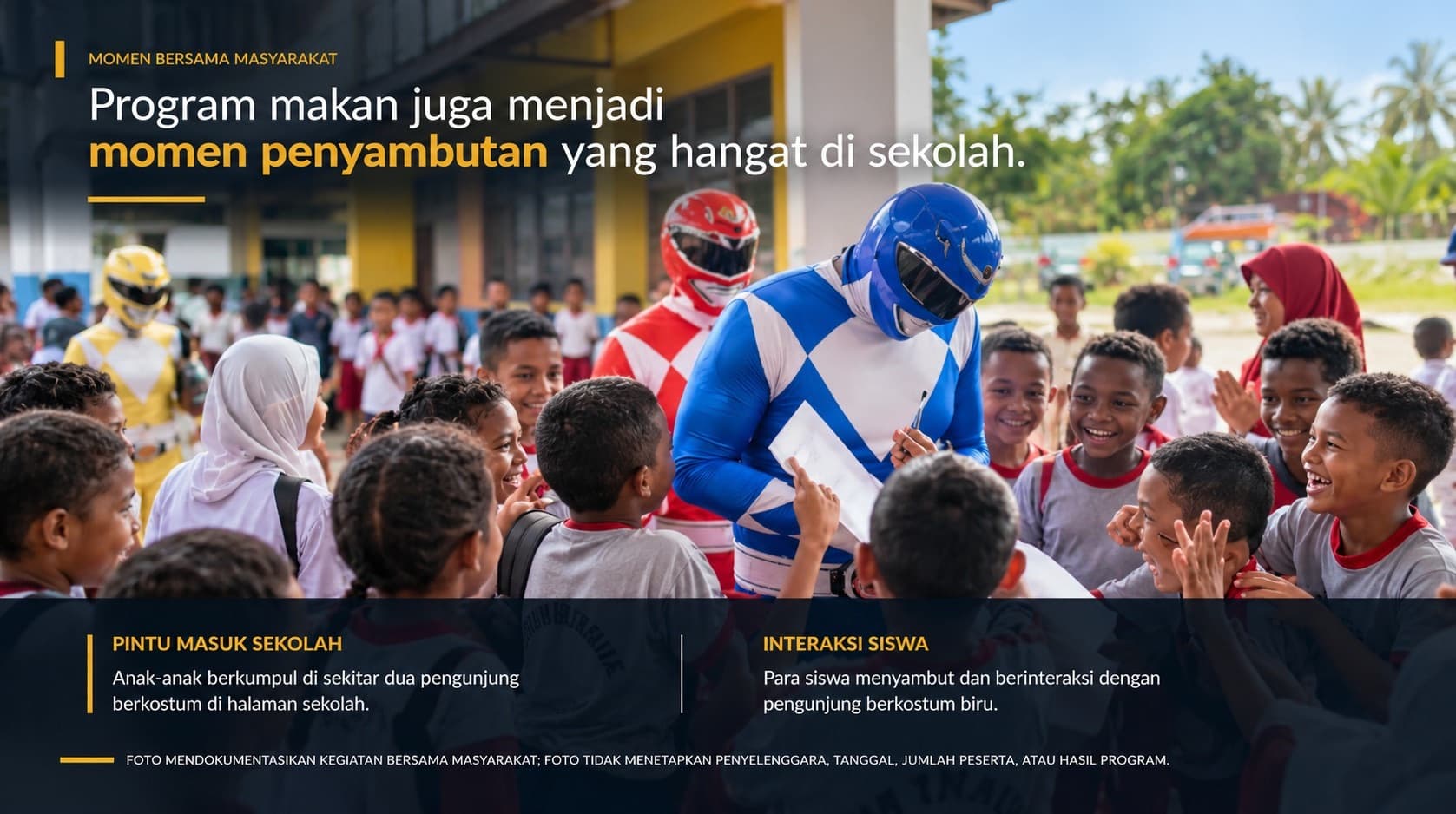
The meal program also becomes a warm welcome at school — children gathered in the yard, staff handling trays, and delivery vehicles in the school environment.
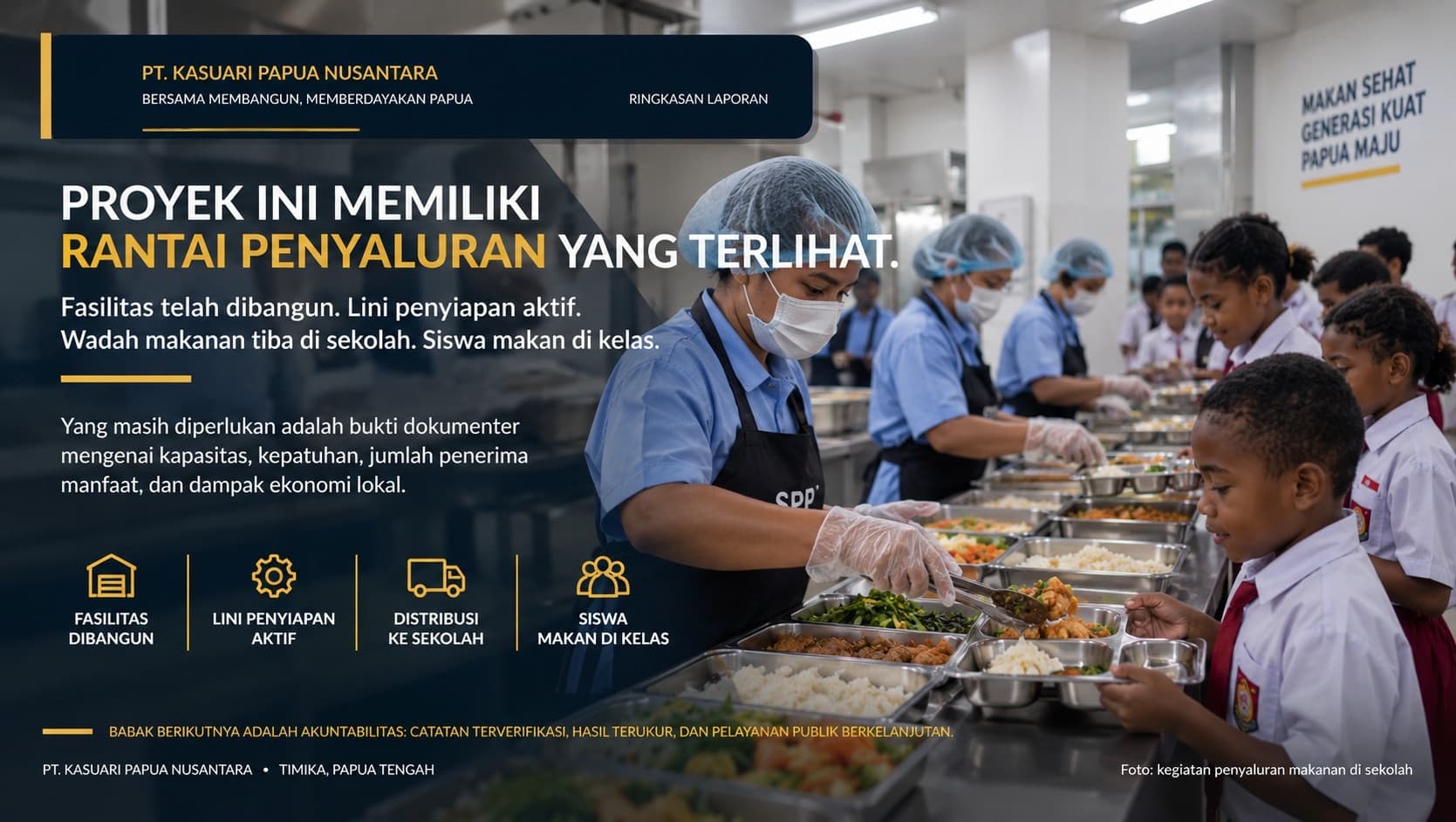
Facilities have been built. The preparation line is active. Meals arrive at school. Students eat in class. That visible chain is the work this story documents.